
Intelliweld® GCR
Gauge Corner Restoration for Embedded Tram Rail
Tramway operators face accelerated side wear in tight curves, leading to premature damage of keeper rails that increases safety risks. The remedy is often costly, disruptive rail replacement that stops tram and road traffic impacting surrounding businesses and communities. The use of higher carbon, wear-resistant rail grades and polymer-encased grooved rails that require controlled heat application add complexity to repair by traditional welding techniques.
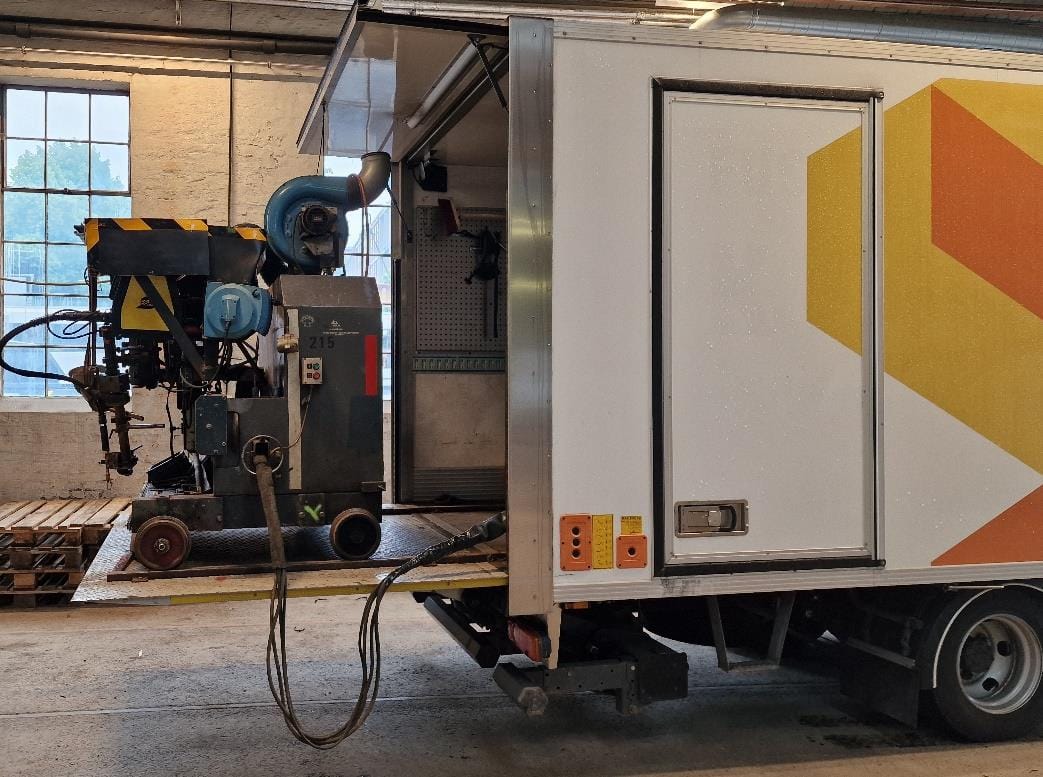
Holland’s Intelliweld® Gauge Corner Restoration (GCR) machine offers a proven alternative to rail replacement. An automated, submerged arc welding solution designed for in-situ restoration of side-worn embedded grooved rails, GCR restores rail profile and extends asset life.
Patented Low Temperature Preheat ensures Weld Quality
GCR’s patented low-preheat and optimized welding parameters precisely control heat transfer and cooling rate. Advanced temperature control units (TCU) at the strike-on and strike-off end to ensure a crack-free deposition and tough heat affected zone microstructure. Combined with automated process control and data logging, the GCR provides repeatable and verifiable execution, delivering consistent quality while minimizing risk.
Intelliweld GCR vs. Repair or Replacement
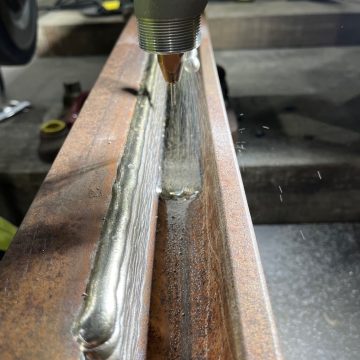 Manual Repair:
✔ Fast, flexible
✖ Variable, short-lived, operator-dependent
Full Replacement:
✔ Resets asset
✖ High cost, disruption, and risk
Intelliweld® GCR:
✔ Controlled, repeatable, in-situ restoration
✔ Extends asset life and defers replacement
✔ Reduces disruption and environmental impact
Restore Rail. Reduce Disruption. Extend Asset Life.
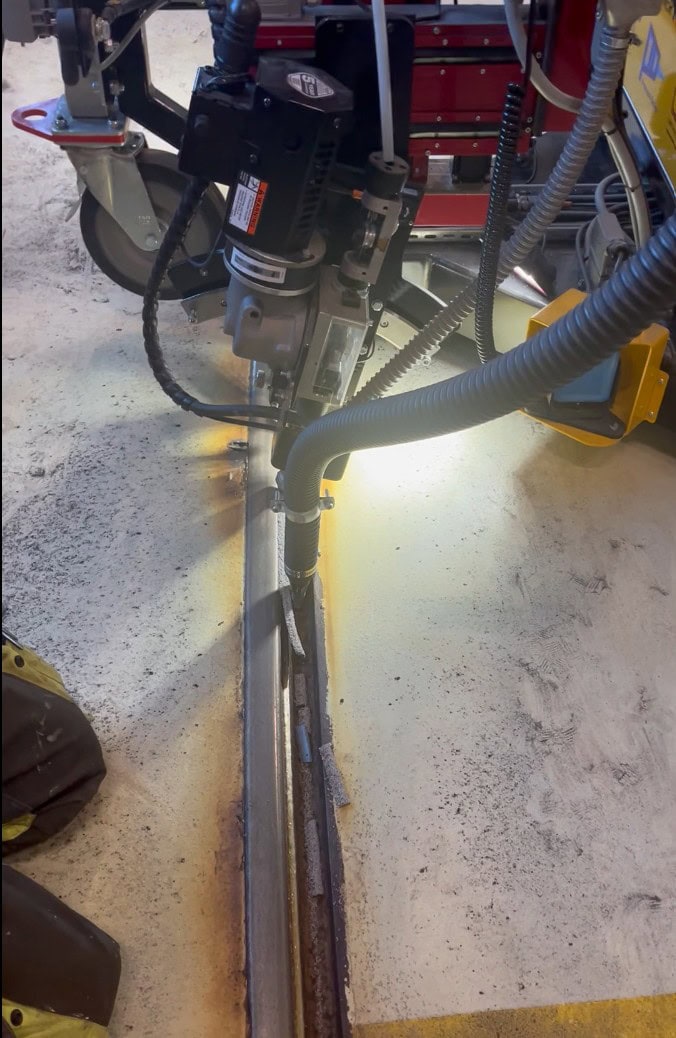
The GCR delivers high-productivity restoration, completing ~7 m of gauge corner repair in under four hours. Restoration is performed entirely in place, requiring significantly less equipment, fewer consumables, and smaller work zones than full rail replacement. Beyond productivity, GCR provides a safer and more sustainable maintenance approach. The submerged arc process eliminates exposed sparks, reduces operator fatigue by removing the need for kneeling or bending, and minimizes interaction with live traffic environments.
By restoring rather than replacing rail, operators reduce material consumption, waste generation, and service disruption by lowering lifecycle costs while enhancing safety and reliability - delivering a more sustainable approach to urban rail maintenance.
Key Features
- Patented Low Preheat with TCUs
- Automated weld seam tracking
- Automated flux recovery
- Controlled weld parameters
- Automated data logging and quality control
- Easily transported